the Mountain of Shadow
Sliabh an Scáil
The mist-wrapped inner spine holds shadow-steel veins where An Saol and An Tairseach draw closest together.
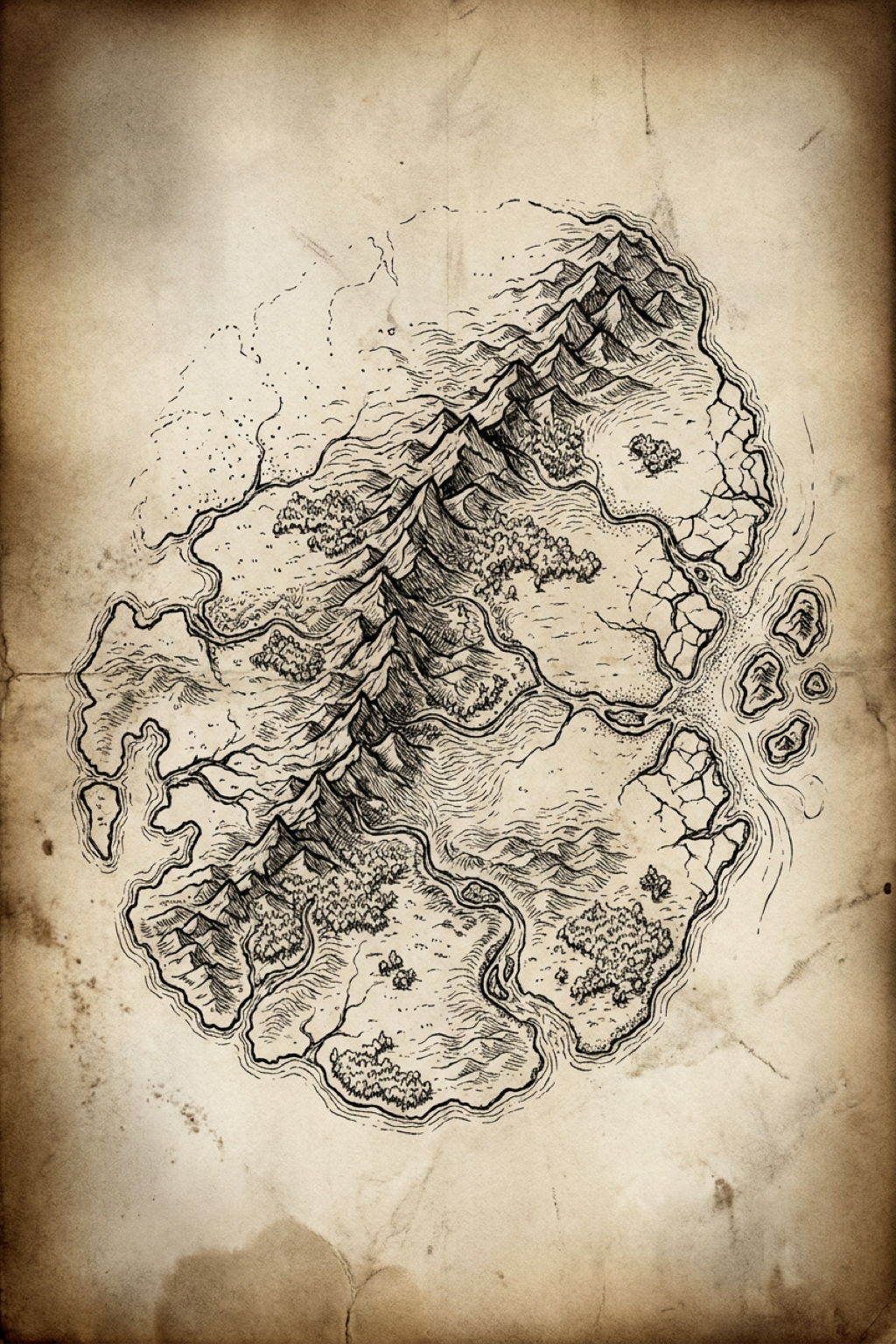
The mountain where the veil thins
Mist covers the range above the treeline. Deeper ground behaves differently: a crew reaches a marked shadow-steel vein, then follows the same survey marks to bare stone, as though the mountain rearranged its interior between visits. Miners answer this by sending a second crew, independent of the first, to confirm the vein before work begins. Even then, a seam they worked last week may need to be re-found next week. Miners say a seam has begun to answer when a hammer-blow returns after the iron has fallen still. A surveyor rubbed out a chalk line with her sleeve. “Again,” she said, and reset the cord.
Work that must be checked twice
A vein found on one survey may have moved by the next. Independent crews confirm each position before work begins.
Working unstable ground
- Survey twice
- Miners cut around sealed barrow-faces. Lucht na Geata works throughout the mountain settlements.
- Keep the count
- Shadow-steel is the measure of authority across Tír na Scáth, so the mountain’s moving seams reach outward into every túath that depends on them.
- Treat the ground as changing
- A vein found on one survey may have moved by the next. Independent crews confirm each position before work begins.
In the wider world
Shadow-steel is the measure of authority across Tír na Scáth, so the mountain’s moving seams reach outward into every túath that depends on them.
Continue
Follow the next useful connection without turning the atlas into a route matrix.