the Great Shore
Cladach Mór
Water has undercut every headland. Stacks stand where headlands once joined the shore.
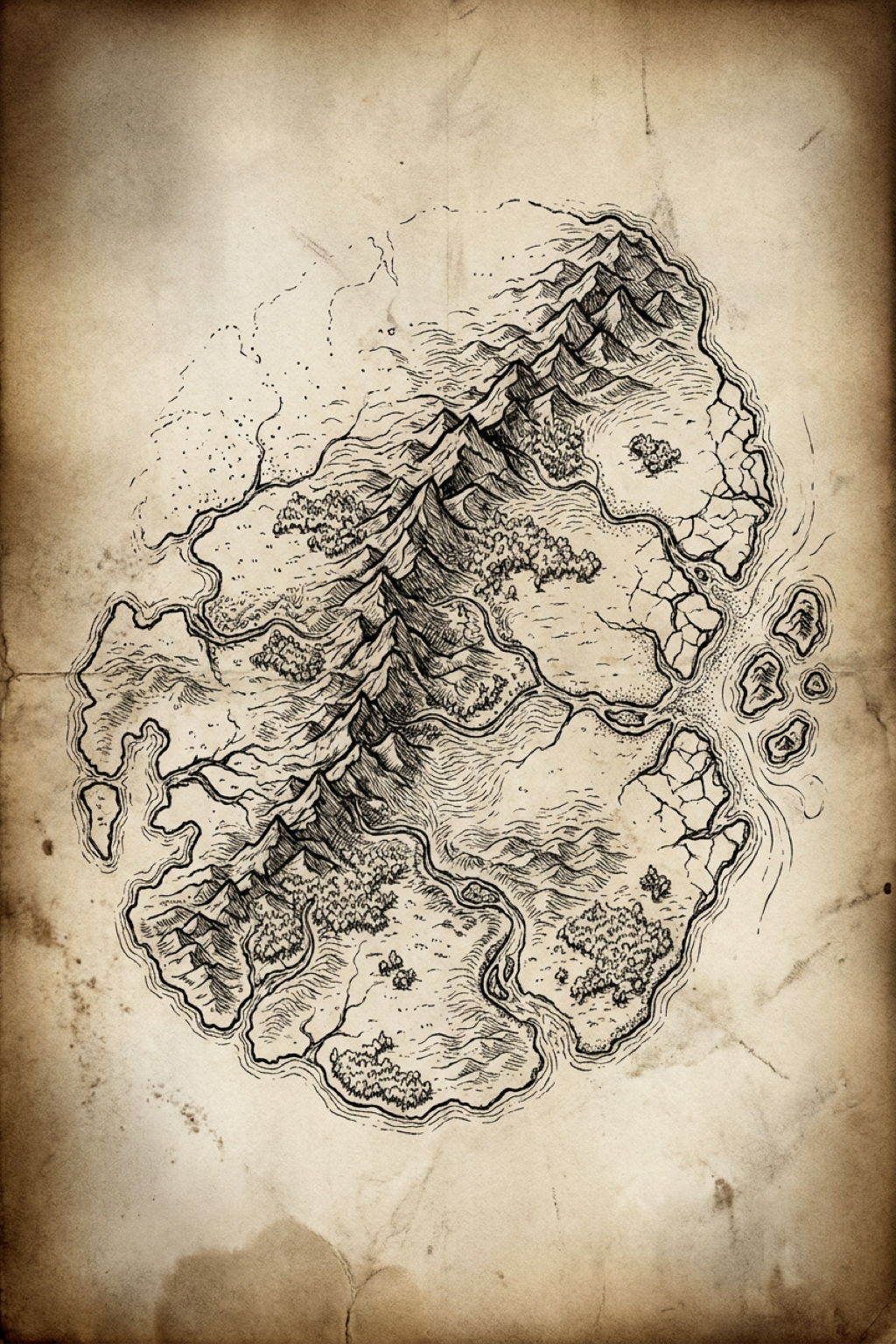
A coast read as a countdown
The rock faces the sea, and every headland records what the water has taken: an undercut base and an arch that may keep its keystone another generation. Coastal folk read these cuts as a countdown. They build nothing on the edge; houses stand a day’s carry inland, with clear exits. The cove-folk share the islanders’ knowledge of departure, though anger at the sea runs through their ordinary work. They produce more than their share of Sentinels, people who choose the hard watch over the profitable one and hold patiently under siege. Before a storm, a Sentinel moved a widow’s fish barrel uphill. By morning, the old platform hung over open water. Smaller things sometimes wash ashore afterward: unfamiliar cloth, an earring, a cord of hair, or a child’s clay figure returned to a family that had not known it was lost.
Nothing on the edge
People build a day’s carry inland, keep exits clear, and treat the cliff face as practical information rather than scenery. Port Súileach’s watch is famous for a reason.
What the coast demands
- What the coast demands
- Oll-Bhiast Fairge moves through deep offshore passages. Lucht an tSuain works among coastal túatha after a bad season.
- What the sea keeps close
- The coast keeps the drowned ancestral homeland present: the sea is both the route the ancestors crossed and a fear that has not finished arriving.
In the wider world
The coast keeps the drowned ancestral homeland present: the sea is both the route the ancestors crossed and a fear that has not finished arriving.
Continue
Follow the next useful connection without turning the atlas into a route matrix.